
Professional Acne Treatments: Peels, Light & Microneedling
Compare professional acne treatments in San Francisco — from chemical peels to laser therapy. Find out which treatment works best for your skin type and budget.
Professional Acne Treatments: What Actually Works
If you've struggled with persistent acne despite trying drugstore products and prescription medications, professional treatments offer a more aggressive approach. These treatments target the root causes of acne — excess oil production, clogged pores, bacteria, and inflammation — at a level that at-home products can't reach.
Here's what separates professional acne treatment from over-the-counter options: depth and precision. Professional treatments penetrate deeper into the skin to clear existing breakouts, prevent new ones, and reduce scarring. They're administered by trained aestheticians or dermatologists who can customize the treatment intensity based on your skin's needs and response.
Chemical peels use controlled acids (salicylic acid, glycolic acid, or lactic acid) to exfoliate dead skin cells and unclog pores. They're effective for blackheads, whiteheads, and mild to moderate inflammatory acne. A series of peels over 6-8 weeks can significantly reduce breakouts and improve skin texture.
Laser and light therapy targets acne-causing bacteria (P. acnes) and reduces oil gland activity. Blue light kills bacteria on the skin's surface, while red light reduces inflammation and promotes healing. These treatments work well for inflammatory acne (the red, painful kind) and can be combined with other treatments for better results.
Microneedling with serums creates tiny channels in the skin to deliver active ingredients deeper while stimulating collagen production. It's particularly effective for acne scars and post-inflammatory hyperpigmentation (the dark marks left behind after breakouts heal). Microneedling won't stop active breakouts, but it's one of the best treatments for improving skin texture once acne is under control.
Extractions and deep-pore facials manually remove blackheads, whiteheads, and clogged pores. When done professionally with proper technique and tools, extractions can clear pores without causing scarring or spreading bacteria. This is especially helpful for comedonal acne (lots of small bumps and clogged pores) that doesn't respond well to topical treatments alone.
The key is matching the treatment to your specific acne type. Someone with hormonal cystic acne needs a different approach than someone with congested pores and blackheads. A good med spa or dermatology clinic will assess your skin during a consultation and recommend a treatment plan tailored to your concerns, skin type, and budget.
Chemical Peels for Acne: How They Work and What to Expect
Chemical peels are one of the most popular professional treatments for acne because they address multiple issues at once: clogged pores, dead skin buildup, bacteria, and inflammation. Unlike at-home exfoliants that sit on the surface, professional-strength peels penetrate deeper to clear out debris and stimulate cell turnover.
Here's how different types of chemical peels work for acne-prone skin:
Salicylic acid peels (BHA). These are the gold standard for acne treatment. Salicylic acid is oil-soluble, which means it can penetrate deep into pores to dissolve the sebum and dead skin cells that cause clogs. It also has anti-inflammatory properties that calm red, angry breakouts. Most acne-focused peels use 20-30% salicylic acid (much stronger than the 2% you'd find in drugstore products). You'll see immediate improvement in blackheads and whiteheads, and with regular treatments, inflammatory acne (the painful red bumps) starts to subside too.
Glycolic acid peels (AHA). Glycolic acid is water-soluble and works on the skin's surface to exfoliate dead skin cells and brighten post-acne dark spots. It's less effective than salicylic acid for active breakouts, but it's excellent for improving overall texture and fading hyperpigmentation. If you're dealing with both acne and dark marks from old breakouts, a combination peel (salicylic + glycolic) gives you the best of both worlds.
Lactic acid peels (gentle AHA). Lactic acid is the mildest option and works well for sensitive skin or people new to chemical peels. It gently exfoliates, hydrates, and brightens without the irritation that stronger acids can cause. If you have rosacea or very reactive skin along with acne, lactic acid peels are a safer starting point.
During the treatment, your aesthetician will cleanse your skin, apply the peel solution, and leave it on for 3-10 minutes depending on the strength and your skin's tolerance. You'll feel a mild tingling or warmth — not painful, but noticeable. After the peel is neutralized and removed, they'll apply a calming serum and sunscreen. Your skin might look slightly pink for a few hours, and you'll notice light flaking or peeling over the next 3-5 days as dead skin sheds. This is normal and expected — don't pick at it.
For best results, plan on a series of 4-6 peels spaced 2-4 weeks apart. One peel gives you a temporary improvement, but consistent treatments over months rewire your skin's behavior — pores stay clearer, breakouts become less frequent, and your skin learns to shed dead cells more efficiently on its own.
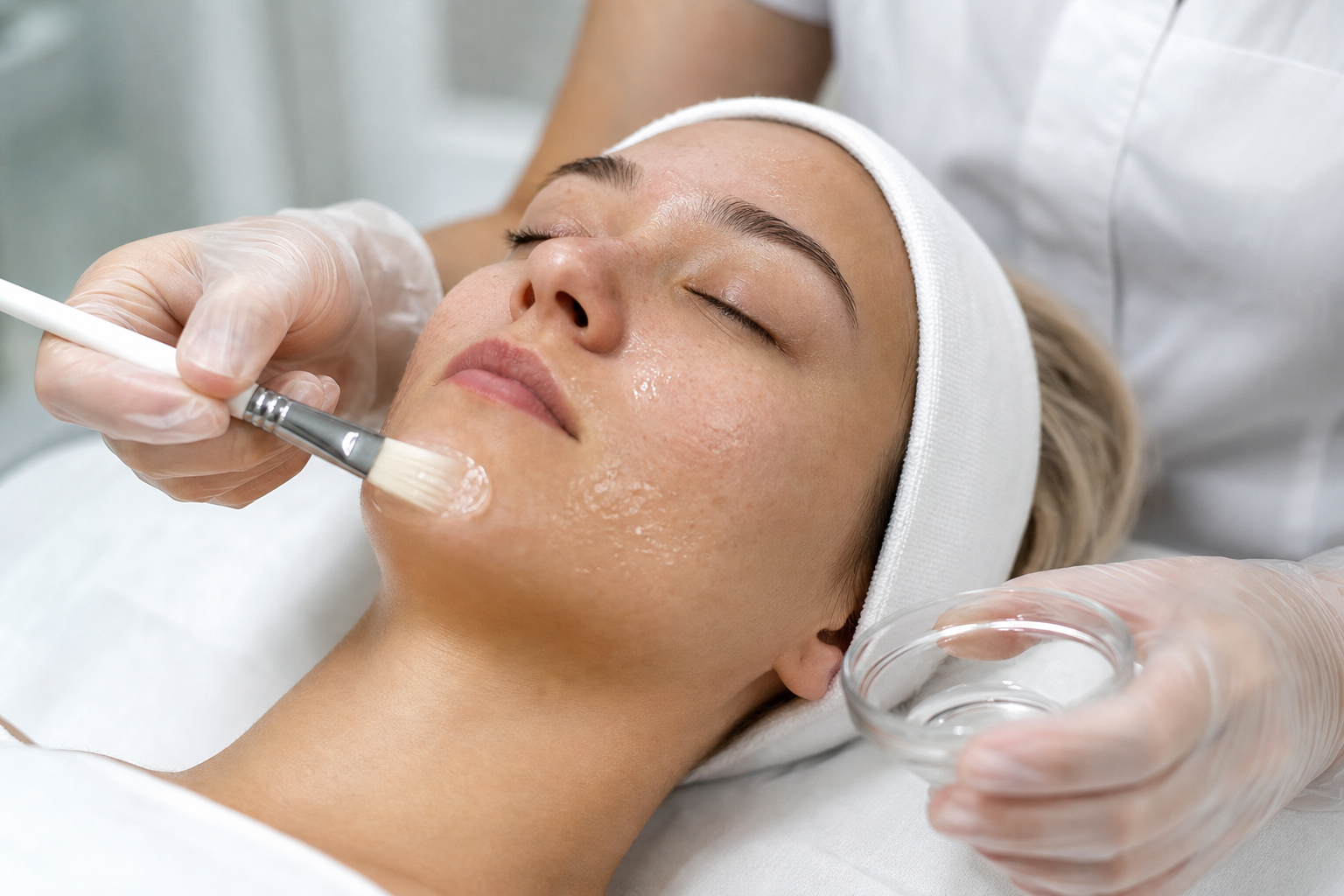
Chemical peels deliver controlled exfoliation to unclog pores and reduce acne.
Laser and Light Therapy for Acne: Blue Light, Red Light, and IPL
Laser and light-based treatments attack acne from a different angle than chemical peels — instead of exfoliating the surface, they target bacteria and oil glands beneath the skin. These treatments are especially effective for inflammatory acne (red, painful bumps) that doesn't respond well to topical products or peels alone.
Here's how the most common light therapies work:
Blue light therapy. Blue light (wavelength around 415 nm) penetrates the skin and kills Propionibacterium acnes (P. acnes), the bacteria responsible for inflamed breakouts. When P. acnes absorbs blue light, it produces free radicals that destroy the bacteria from within. Blue light is painless, requires no downtime, and works best for mild to moderate acne on the face and chest. You'll need multiple sessions (usually 8-10 treatments over 4-6 weeks) to see significant improvement, but it's one of the safest acne treatments available — no UV radiation, no heat damage, and no risk of scarring.
Red light therapy. Red light (wavelength around 660 nm) doesn't kill bacteria directly, but it reduces inflammation and promotes healing. It stimulates collagen production and improves blood flow to the skin, which helps existing breakouts heal faster and reduces the redness and swelling that make acne look worse. Red light is often combined with blue light in a dual-wavelength treatment for better results — blue kills the bacteria, red calms the inflammation.
IPL (Intense Pulsed Light). IPL isn't technically a laser, but it uses broad-spectrum light to target multiple skin issues at once: acne bacteria, redness, hyperpigmentation, and broken capillaries. It's more versatile than blue or red light therapy, but also more aggressive. You'll experience mild heat during the treatment (like a rubber band snapping against your skin) and some redness afterward. IPL works well if you're dealing with both active acne and post-acne discoloration or rosacea.
What to expect during treatment. Light therapy sessions are quick — usually 15-30 minutes. You'll wear protective goggles to shield your eyes from the light, and the aesthetician will position the device close to your skin. Blue and red light feel warm and relaxing; IPL has a slight stinging sensation. There's no downtime with blue/red light, though IPL might leave your skin pink for a few hours. You'll need a series of treatments to see lasting results — think of it like physical therapy for your skin, where consistency matters more than a single session.
Light therapy works best when combined with other treatments. For example, doing a salicylic acid peel to unclog pores and then following up with blue light to kill bacteria gives you better, faster clearance than either treatment alone. Your med spa provider can create a customized protocol based on your acne severity and how your skin responds.
Microneedling for Acne Scars and Texture
Microneedling (also called collagen induction therapy) won't stop active breakouts, but it's one of the most effective treatments for the aftermath — acne scars, uneven texture, enlarged pores, and post-inflammatory hyperpigmentation. If you've got your acne under control but your skin still looks damaged, this is where microneedling shines.
Here's how it works: A device with fine needles creates thousands of tiny, controlled micro-injuries in your skin. Your body responds by flooding the area with growth factors and producing new collagen and elastin. Over the next 4-6 weeks, the new tissue gradually fills in depressed scars, smooths out rough texture, and tightens enlarged pores. It's like hitting "reset" on your skin's structure.
Professional microneedling (done at a med spa or dermatology clinic) uses needles that penetrate 0.5-2.5 mm deep, depending on your concerns. Shallow needling (0.5-1 mm) improves texture and brightness. Deeper needling (1.5-2.5 mm) targets atrophic scars (the indented kind). The treatment is done under topical numbing cream, so you'll feel pressure and a scratching sensation but not sharp pain. Afterward, your skin will be red and slightly swollen for 24-48 hours — it looks like a mild sunburn.
What makes professional microneedling different from at-home derma rollers is depth, precision, and sterility. At-home devices only reach 0.25-0.5 mm (too shallow to trigger real collagen remodeling) and can spread bacteria if not cleaned properly. Professional microneedling goes deeper under controlled, sterile conditions and often combines the needling with serum infusion — active ingredients like hyaluronic acid, growth factors, or vitamin C are applied immediately after needling so they penetrate deeper into the channels.
You'll need 3-6 treatments spaced 4-6 weeks apart to see significant scar improvement. Results are gradual — you won't wake up the next day with perfect skin. But over 3-6 months, most people see a 30-50% reduction in scar depth and a noticeable improvement in overall texture. Combine microneedling with chemical peels or laser therapy for even better results, though you'll need to space the treatments properly to avoid over-treating your skin.
One important note: don't get microneedling done while you still have active inflammatory acne. The needles can spread bacteria and worsen breakouts. Wait until your acne is under control (either through prescription medications, chemical peels, or light therapy) before starting microneedling for scars.
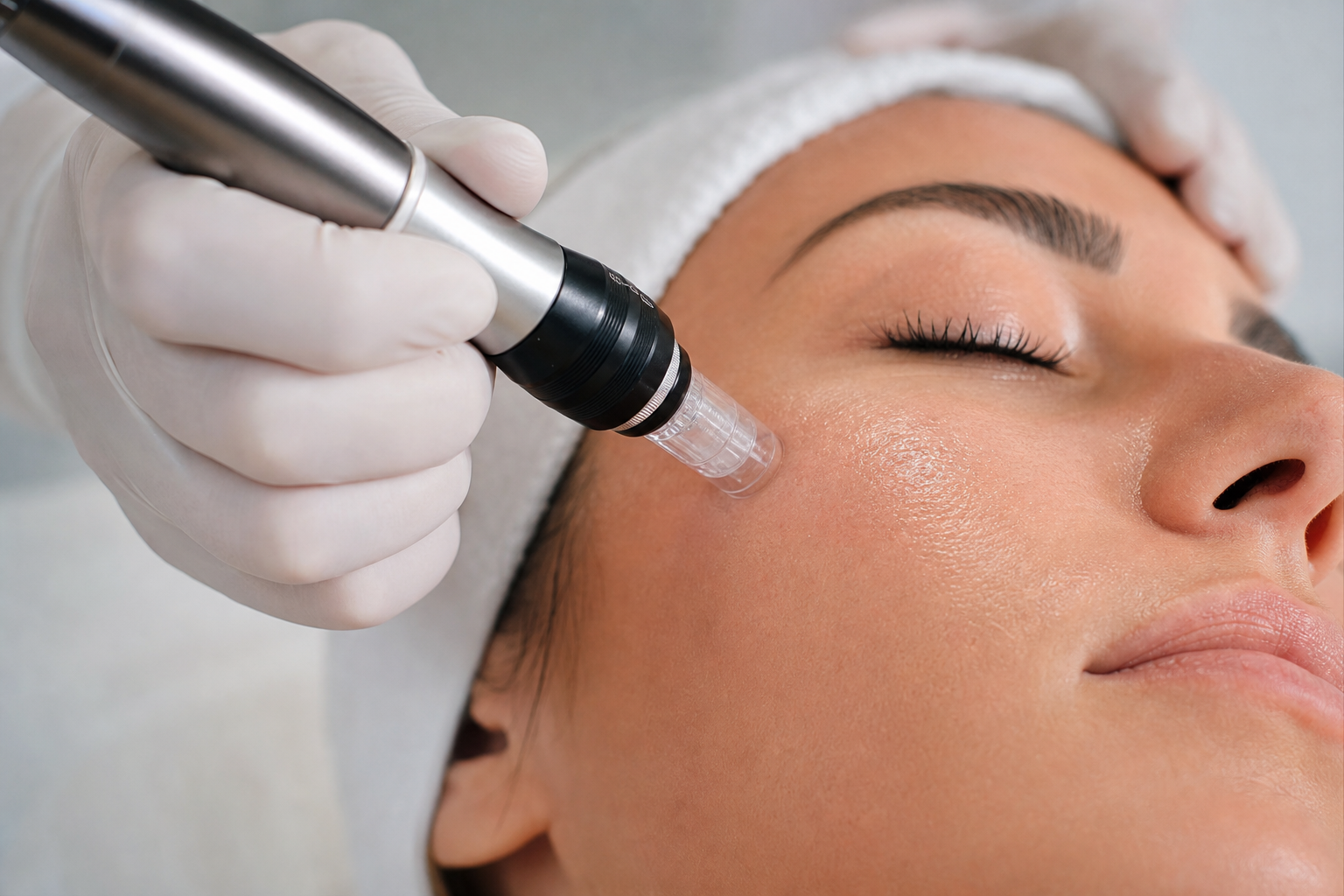
Microneedling stimulates collagen production to fill in acne scars and improve skin texture.
What to Look for in a San Francisco Acne Treatment Provider
Not all med spas and dermatology clinics offer the same level of expertise or equipment when it comes to acne treatment. Here's what to look for when choosing a provider in San Francisco:
Licensed aestheticians or medical staff. Chemical peels, microneedling, and laser treatments should only be performed by licensed aestheticians or under the supervision of a physician. Ask about credentials during your consultation — California requires specific certifications for these procedures. If the person doing your treatment can't clearly explain their training and licensing, walk away.
Customized treatment plans, not one-size-fits-all packages. Your acne isn't identical to someone else's, and your treatment shouldn't be either. A good provider will assess your skin type, acne severity, scarring, and previous treatments before recommending a plan. If they're pushing a specific treatment without asking detailed questions about your skin history, that's a red flag. The best results come from tailored protocols that combine multiple treatments over time.
Professional-grade equipment. There's a big difference between medical-grade devices and budget equipment. For laser and light therapy, ask what device they use and whether it's FDA-cleared for acne treatment. For microneedling, ask about needle depth control and sterility protocols. Reputable clinics invest in high-quality tools and maintain them properly.
Realistic expectations and honest communication. Be wary of providers who promise instant results or guarantee perfect skin. Professional acne treatment requires patience and consistency — you're looking at weeks or months, not days. A trustworthy provider will give you a realistic timeline, explain potential side effects, and tell you if your expectations aren't achievable with the treatments they offer.
Before-and-after photos from real clients. Ask to see results from patients with similar acne to yours. Portfolio photos should show a range of skin types and acne severities, not just the best-case scenarios. If a clinic only shows airbrushed, perfect results, they're not being transparent about what's achievable.
Clean, professional environment. Acne treatments involve breaking the skin barrier (peels, microneedling, lasers), so sterility and hygiene are critical. The treatment room should be clean, tools should be sterilized or single-use, and staff should follow proper sanitation protocols. If you see reused supplies or questionable cleanliness, don't risk it.
In San Francisco, you'll find acne treatment providers in neighborhoods like Union Square, the Financial District, Nob Hill, and the Mission. Prices vary widely — chemical peels range from $150-$300 per session, laser treatments from $200-$500, and microneedling from $300-$600. Don't choose based on price alone; expertise and safety matter more than saving $50.
Cost of Acne Treatments in San Francisco
Professional acne treatment is an investment, and prices in San Francisco tend to run higher than the national average due to the city's cost of living and concentration of high-end med spas. Here's what you can expect to pay for the most common treatments:
Chemical peels: $150-$300 per session. Salicylic acid peels for acne usually fall on the lower end ($150-$200), while combination peels or stronger formulations cost $250-$300. Most providers recommend a series of 4-6 peels spaced 2-4 weeks apart, so you're looking at $600-$1,800 for a full treatment course.
Blue light therapy: $100-$250 per session. Since blue light requires multiple treatments (8-10 sessions over 4-6 weeks), the total cost typically runs $800-$2,500. Some clinics offer package deals that bring the per-session price down if you prepay for a series.
IPL (Intense Pulsed Light): $300-$500 per session. IPL is more expensive than basic blue/red light therapy because it's a more versatile device. You'll need 3-5 sessions for acne, so budget $900-$2,500 total.
Microneedling: $300-$600 per session. Pricing depends on the depth of treatment and whether serums are added. Basic microneedling for texture and mild scarring costs $300-$400, while deeper treatments with growth factor serums or PRP (platelet-rich plasma) run $500-$600. Plan on 3-6 sessions for significant scar improvement, so total cost ranges from $900-$3,600.
Combination treatments: varies widely. Many clinics offer packages that combine multiple modalities — for example, a chemical peel followed by blue light therapy, or microneedling with a peel prep. These bundles usually save you 10-20% compared to booking each treatment separately. Expect to pay $400-$800 per combination session.
Insurance doesn't typically cover cosmetic acne treatments, even if your acne is severe. However, if your dermatologist prescribes laser therapy or peels as medical treatment (not just cosmetic improvement), some insurance plans might cover a portion. Check with your provider and insurance company before assuming everything is out-of-pocket.
Many San Francisco med spas offer financing through companies like CareCredit or Cherry, which let you spread the cost over 6-24 months with 0% interest if paid off within the promotional period. If you're looking at a $2,000-$3,000 treatment plan, financing can make it more manageable at $100-$200/month.
One cost-saving tip: ask about first-time client discounts or seasonal promotions. Many clinics offer 15-20% off your first treatment or package deal discounts during slower months (January-February, September-October). Don't be afraid to call multiple providers and compare pricing — quality matters, but there's no reason to overpay for the same treatment.
Building an Effective Acne Treatment Plan
The most effective approach to clearing acne combines multiple treatments over time, not a single "magic bullet" procedure. Here's how to build a treatment plan that actually works:
Start with the right foundation. Before investing in professional treatments, make sure you have a solid at-home skincare routine. That means a gentle cleanser (not harsh scrubs), a treatment product with benzoyl peroxide or salicylic acid, and a lightweight moisturizer with SPF. Professional treatments work better when your skin is already being maintained properly between appointments. If you're using the wrong products at home — overly drying acne washes, heavy moisturizers that clog pores, or skipping sunscreen — you'll sabotage your results.
Address active breakouts first, scars second. If you're still getting new breakouts, prioritize treatments that prevent acne formation: chemical peels to unclog pores, blue light therapy to kill bacteria, and possibly a prescription retinoid or antibiotic from your dermatologist. Once your skin is consistently clear for 2-3 months, then shift focus to microneedling or laser resurfacing for scars. Treating scars while you're still breaking out is like repainting a wall that's still cracking — you won't get lasting results.
Combine treatments strategically. The best acne protocols layer multiple modalities. For example: monthly chemical peels to keep pores clear, weekly blue light sessions during active breakout phases, and quarterly microneedling once acne is controlled. Your aesthetician can map out a timeline that spaces treatments appropriately — some can be done together (peel + light therapy), while others need 4-6 weeks between sessions (microneedling shouldn't be done right after a deep peel).
Commit to consistency. One chemical peel or two blue light sessions won't cure chronic acne. Professional treatments work through cumulative improvement — each session builds on the last to retrain your skin's behavior. Plan on 3-6 months of regular appointments to see significant, lasting results. If you can't commit to that timeline or afford the full series, you're better off waiting until you can rather than doing one or two sporadic treatments.
Track your progress with photos. Take close-up photos of your face in the same lighting every 2 weeks. When you're looking at your skin in the mirror every day, it's hard to notice gradual improvement. Photos give you objective proof that the treatments are working (or not). Share these with your provider during follow-up appointments so they can adjust your treatment plan if needed.
Be patient with results. Your skin takes 28-40 days to complete a full cell turnover cycle, which means you won't see the full effect of most treatments until 4-8 weeks later. If you're not seeing improvement after one session, that's normal. If you're not seeing improvement after 3-4 sessions, talk to your provider about adjusting the approach — maybe you need a stronger peel, deeper microneedling, or a different combination of treatments.
Professional acne treatment works, but it requires the right treatments, the right provider, and the right expectations. If you're willing to invest the time and money, you can get clear, healthy skin. If you're looking for a quick fix, you'll be disappointed. Find a provider at Aesthetic OOGII who listens to your concerns, creates a customized plan, and communicates honestly about what's achievable.
Frequently Asked Questions About Acne Treatment
How long does it take to see results from professional acne treatments?
It depends on the treatment type and your acne severity. Chemical peels and blue light therapy usually show initial improvement within 2-4 weeks, but you'll need 6-12 weeks of consistent treatments to see significant clearing. Microneedling for scars takes longer — most people see noticeable improvement after 3-6 months and 3-6 sessions. Your skin's natural cell turnover cycle is 28-40 days, so any treatment needs at least that long to produce visible results.
Can I get professional acne treatments if I have sensitive skin?
Yes, but you'll need gentler options. Lactic acid peels are milder than salicylic or glycolic acid and work well for sensitive skin. Blue and red light therapy are completely non-irritating and safe for even the most reactive skin types. Avoid IPL and aggressive chemical peels if you have rosacea or very thin skin. Always start with a patch test or low-strength treatment to see how your skin responds before committing to a full series.
Are acne treatments safe for darker skin tones?
Chemical peels and microneedling are generally safe for all skin tones when done properly. However, laser and IPL treatments carry a higher risk of hyperpigmentation (dark spots) in darker skin. If you have medium to dark skin (Fitzpatrick types IV-VI), work with a provider experienced in treating melanin-rich skin. They'll use lower laser settings, choose wavelengths less likely to trigger pigmentation issues, and closely monitor your healing process.
Can I wear makeup after an acne treatment?
It depends on the treatment. After a light chemical peel or blue light therapy, you can usually wear makeup the next day. After microneedling, wait 24 hours before applying any makeup to let the micro-channels close and reduce infection risk. After a deeper peel or laser treatment, wait 48-72 hours or until all flaking and redness have subsided. Always use clean brushes and non-comedogenic (won't clog pores) products when you do resume makeup.
Do I need a prescription from a dermatologist before getting professional treatments?
No, most med spa treatments don't require a prescription or dermatologist referral. However, if you're already on prescription acne medications (tretinoin, Accutane, spironolactone), tell your aesthetician before booking. Some medications make your skin more sensitive and require adjusting treatment intensity. If you've been on Accutane within the past 6-12 months, you shouldn't get waxing, chemical peels, or aggressive laser treatments due to increased risk of scarring.
What's the difference between at-home and professional acne treatments?
Strength, depth, and expertise. At-home products (drugstore cleansers, serums, masks) use lower concentrations of active ingredients (usually 2% salicylic acid or 2.5% benzoyl peroxide). Professional treatments use 20-30% salicylic acid, deeper microneedling (1.5-2.5mm vs 0.25mm with derma rollers), and medical-grade lasers. Professional treatments also come with proper diagnosis — an aesthetician can identify whether you have hormonal acne, bacterial acne, or clogged pores, and customize the treatment accordingly.
Pricing and booking: see current pricing, session lengths and packages for acne treatment in San Francisco.
Acne Treatments at a Glance: Cost, Downtime, and Best For
Quick answer: the right acne treatment depends on your acne type and how much downtime you can tolerate. Here's a fast comparison of the four professional options covered above:
- Chemical peels (salicylic/glycolic): $150-$250 per session, 3-5 days of light flaking, best for blackheads, whiteheads, and mild inflammatory acne.
- Blue/red light therapy: $75-$150 per session, zero downtime, best for mild to moderate inflammatory acne and maintenance between peels.
- IPL for acne: $300-$450 per session, mild pinkness for a few hours, best when acne overlaps with redness or sun damage.
- Microneedling with serums: $250-$400 per session, 1-2 days of redness, best for acne scars and texture once active breakouts are controlled.
- Manual extractions: $85-$150 per session, no downtime, best for comedonal acne (clogged pores, blackheads) that resists topical treatment.
Most clients combine two of these, for example peels every 3-4 weeks plus light therapy maintenance, rather than relying on a single treatment.
What the Research Says About Professional Acne Treatment
Acne affects up to 50 million Americans annually, according to the American Academy of Dermatology, making it the most common skin condition in the country. The AAD also notes that professional treatment started early reduces the risk of permanent scarring, which is why dermatologists recommend seeing a specialist within the first few months of persistent breakouts rather than waiting.
Clinical studies on salicylic acid peels show measurable reduction in comedones (clogged pores) after a series of 4-6 treatments, which is why we recommend that minimum course length rather than a single session. For blue light therapy, published dermatology research documents bacterial reduction in P. acnes colonies after consistent twice-weekly sessions over 4-6 weeks. These aren't overnight fixes. They're cumulative treatments that work by changing the skin's environment over weeks, not days.
Here's how to think about the timeline for each treatment type:
- Weeks 1-2: Skin adjusts, some purging is normal for peels and retinoid-adjacent treatments.
- Weeks 3-6: Visible reduction in new breakouts as pores clear and bacteria counts drop.
- Weeks 6-12: Texture and post-acne marks start to fade, especially when microneedling is added.
- 3+ months: Maintenance phase — most clients shift to monthly treatments to keep skin clear.
Acne Treatment Cost and Timeline at a Glance
Acne treatment is not one-size-fits-all, and price varies with method and severity. Here's a quick comparison to help you budget and set expectations:
- Chemical peel series (4-6 sessions): $110-$150 per session, visible improvement in 3-4 weeks, full course over 8-12 weeks
- Blue/red light therapy (8-10 sessions): $90-$130 per session, results build gradually over 4-6 weeks
- Microneedling with growth factors (3-session package): $300-$450 per session, scar improvement visible at 4-6 weeks, full collagen remodeling takes 3-6 months
- Deep-pore extraction facial: $120-$160 per session, immediate visible clearing, best repeated monthly
A 2021 study in the Journal of Clinical and Aesthetic Dermatology found that combination therapy, pairing chemical peels with light-based treatments, cleared moderate inflammatory acne 30% faster than either treatment alone. That's why most treatment plans at our San Francisco studio combine two modalities rather than relying on a single approach.
How to Choose Based on Your Acne Type
- Blackheads and clogged pores (comedonal acne): start with extractions plus a salicylic acid peel
- Red, inflamed breakouts: blue and red light therapy, often combined with a gentle lactic peel
- Acne scars and dark marks left behind: microneedling with growth factors, done once active breakouts are under control
- Hormonal cystic acne: a dermatologist consult first, then peels or light therapy as a supporting treatment
2026 Update: What's Changed in Professional Acne Treatment
Treatment protocols have gotten more precise since acne-focused peels and light therapy first went mainstream. Clinics now commonly combine modalities in the same visit rather than running one treatment type in isolation. A typical 2026 protocol pairs a salicylic acid peel with LED light therapy in the same session: the peel clears existing congestion while blue light continues suppressing P. acnes bacteria between visits. This combination approach tends to shorten the timeline to visible improvement compared to running either treatment alone.
If you're also weighing HydraFacial against a chemical peel for texture and tone (not active breakouts), we compare the two directly in HydraFacial vs Chemical Peel: Which Is Right for Dull Skin? — useful once your acne is under control and you're shifting focus to scarring and dullness. For active acne, though, the peel and light-therapy combination described above remains the more targeted starting point, and a consultation on our treatment menu is the fastest way to get a plan matched to your skin type and budget.
Professional Acne Treatments: Quick Reference Facts
The American Academy of Dermatology notes that up to 50 million Americans deal with acne in a given year, and professional treatments reach deeper than any over-the-counter product because they're applied at clinical strength under supervision. Here's a fast comparison of the main options covered in this guide.
- Chemical peels (salicylic, glycolic, lactic): Best for blackheads, whiteheads, and mild-to-moderate inflammatory acne. Series of 4-6 peels, 2-4 weeks apart.
- Blue and red light therapy: Best for inflammatory acne without downtime. Needs 8-10 sessions over 4-6 weeks for visible results.
- IPL: Best when acne overlaps with redness, rosacea, or post-acne discoloration.
- Microneedling with serums: Best for acne scars and dark marks once active breakouts are controlled, not for active inflamed acne.
- Extractions: Best for comedonal acne (blackheads/whiteheads) that hasn't responded to topical products.
Matching treatment to acne type matters more than picking the "strongest" option. Someone with hormonal cystic acne needs a different plan than someone with clogged pores and blackheads, which is why a consultation before booking through our treatment menu saves time and money.